AI and the Job Market: Beyond the Narrative of Inevitability
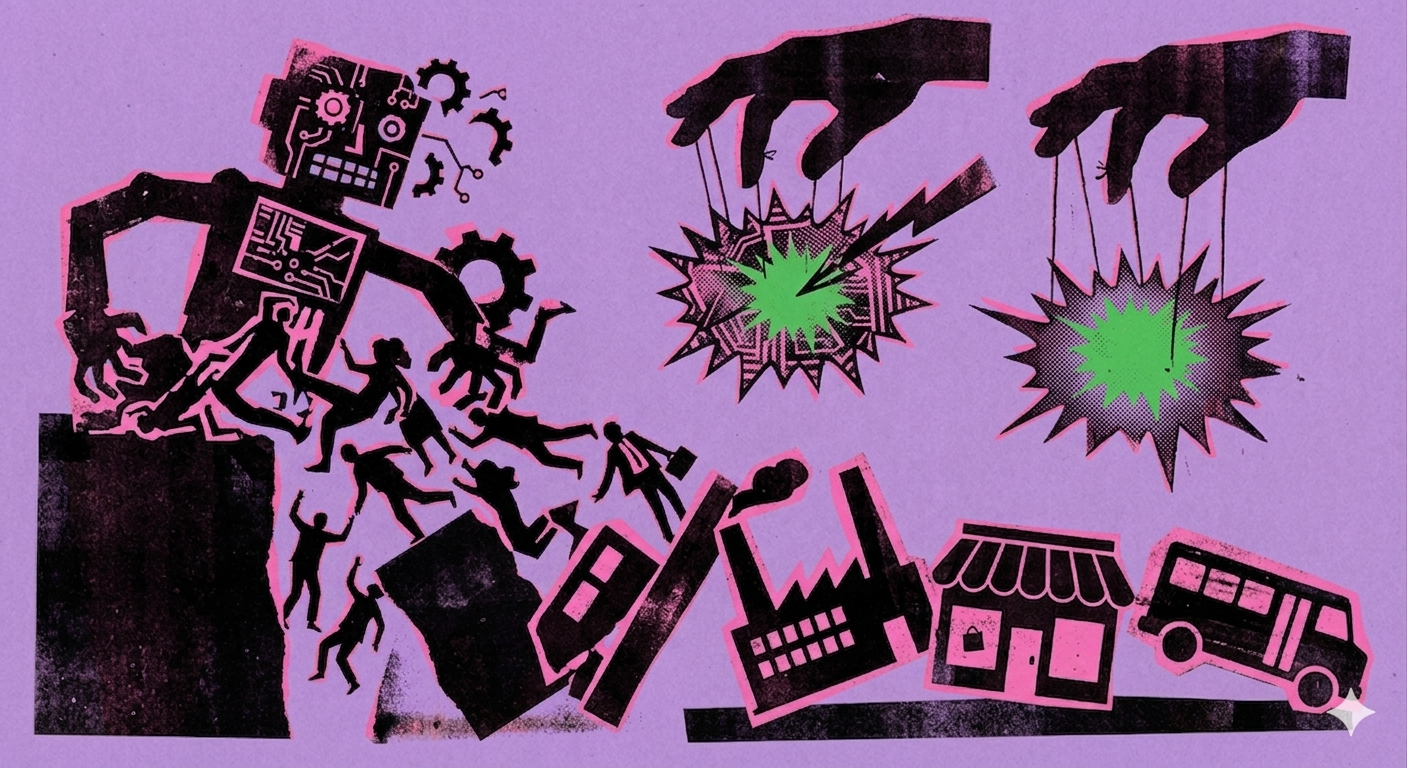
For the past couple of years, we’ve been facing a big wave of layoffs around the world. The number of jobs has decreased, and there are lots of talented unemployed engineers who are now competing for this limited number of positions.
I’m one of those who was laid off, and I know that it’s much harder to get a job now than it was back when I started my career. Recently, I stumbled upon an article: “Salesforce’s CEO regrets firing 4k employees.” It caught my attention, and I started to think: what is the real cause of mass layoffs, and what will happen to the job market?
Everything you hear about AI and your job is framed in two ways. It’s framed as inevitable: the technology gets better, your job disappears, and there’s nothing anyone can do. And it’s framed as competition: you versus the machine, where the machine is faster, cheaper, and never sleeps.
Both frames are wrong or, at best, just one way of looking at it. And they happen to be the way that benefits the people selling the technology.
Recently, Mustafa Suleiman, the CEO of Microsoft AI, said that most white-collar jobs - lawyers, accountants, project managers, marketing professionals - could be fully automated within 12 to 18 months. That’s the inevitability frame. And it’s a sales pitch.
His company and other major AI companies have collectively invested trillions of dollars in AI infrastructure over the past couple of years. That money needs to generate a return. And the only way that works for their investors is if AI replaces human labor at a massive scale. So when he tells you your job might be gone in 18 months, he’s not warning you - he’s telling investors that the investment will pay off.
But I want someone to actually walk me through how this really works. The economy is a loop, right? Companies pay workers, workers buy things, and revenue comes back. If you automate away the workers, the customers disappear. So who are you selling AI to exactly? Other AIs?
Henry Ford figured this out 100 years ago. He paid his workers enough to buy the cars they built. It wasn’t charity - it was the minimum viable economy.
The entire conversation is framed as inevitability and competition. But the economics are actually on your side, and the people telling you otherwise have trillions of dollars riding on you believing something else.
At the same time, all financial newspapers are talking about an AI bubble. But what is it?
Tech companies have already invested over a trillion dollars in developing AI, and planned investments will exceed 4 trillion dollars over the next five years. If you invest that much money, you need to generate revenue to pay it back. But generative AI is not generating nearly that level of revenue - it’s tiny compared to the amount being invested.
So the entire industry is built on the idea that revenue will come later. If it doesn’t, or if people stop believing that it will, the bubble will burst.
Why should we care? Because it could crash the stock market, which is highly dependent on AI stocks. A crashing stock market means slower hiring across most companies and potentially large layoffs - even beyond the tech industry.
It will also affect wages: more workers competing for fewer jobs will push salaries down. Keeping up with the rising cost of living could become even harder. If people’s retirement savings decline with the market, they will spend less, which could lead to a recession - and potentially even more layoffs.
This is the problem with the AI bubble. The wealth it has created has gone to a very small group of people. But the consequences of the bubble bursting will affect everyone.
It’s a classic example of capitalism privatizing gains while socializing losses. Investors can cash out now while the market is high and walk away with piles of money. But ordinary people, living in the real economy, will feel the pain if and when the AI bubble bursts.